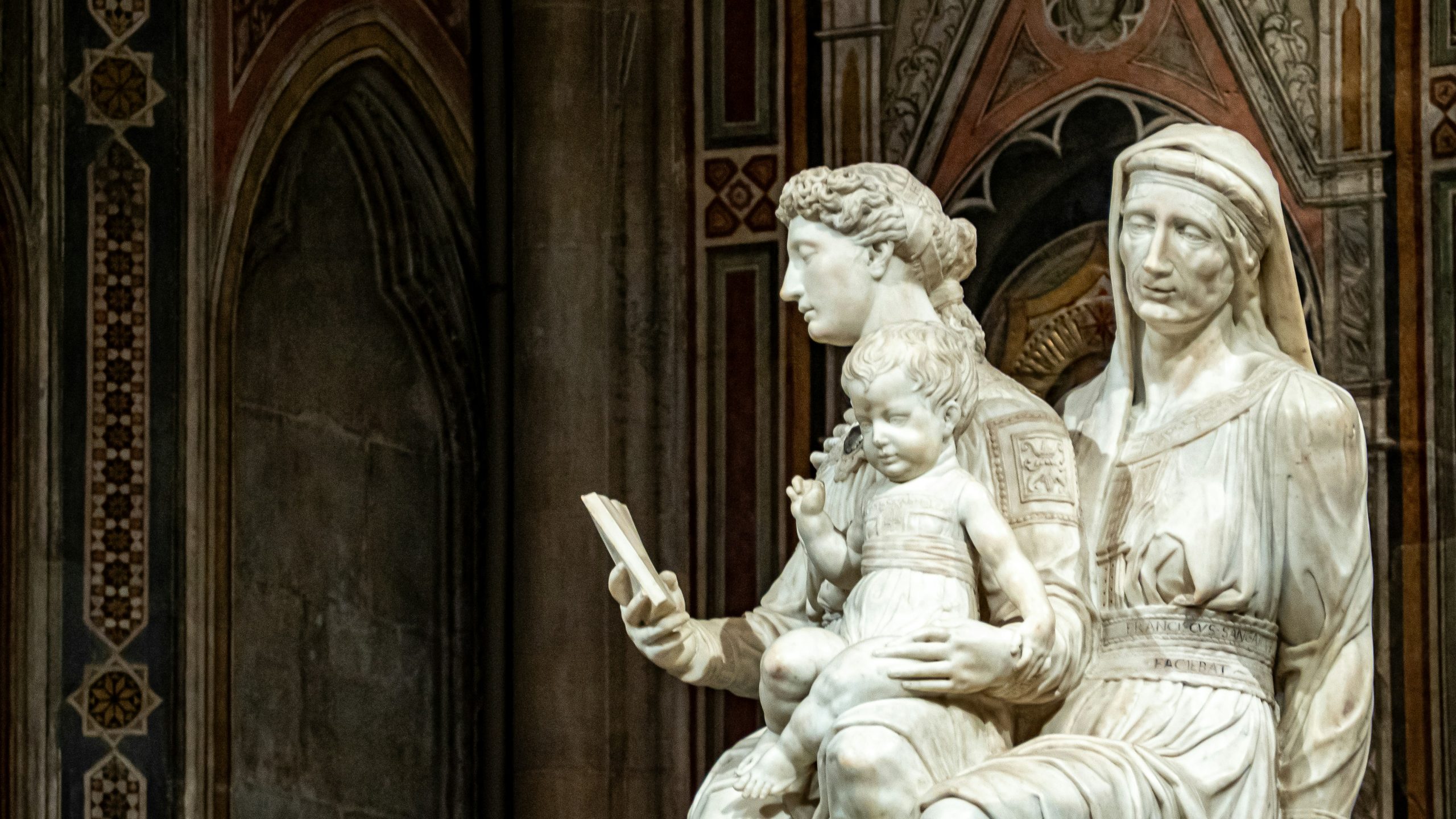
Ever felt like the Renaissance is just a roll call of famous masters like da Vinci, Michelangelo, and Raphael? While their achievements were undeniably profound, there’s a deeper and more intriguing side to this era you seldom hear about. From “talking statues” to an unexpected role for turkeys, these unexpected facts about the Renaissance shine a new light on a period that helped shape modern Europe in surprising ways.
Marvel At The “Talking Statues”
If you ever wandered through Renaissance Rome, you might have encountered statues that seemed to “speak.” Local residents posted satirical poems and epigrams on six ancient statues to criticize political or social issues (Crystallyn’s Substack: link). Pasquino remains the most famous of these statues, still used today for witty public commentary.
- These statues became a Renaissance-era billboard for free speech.
- You could compare them to modern-day social media walls, only carved in stone.
Europe’s First Pet Turkeys
You might think of turkey as a “New World” bird, but Renaissance Italians were among the first to bring them into Europe around 1519. Initially kept as exotic pets, turkeys soon made it into cookbooks like Bartolomeo Scappi’s L’Opera (Crystallyn’s Substack: link). By the late 16th century, these birds were prized for their flavor and no longer just a feathered novelty.
- Renaissance banquets sometimes featured turkey as a centerpiece.
- The Italian flair for culinary experimentation helped popularize this American bird across Europe.
The Black Death’s Impact
It’s no secret that the Black Death devastated Europe in the 14th century, but you might be shocked to learn how it helped spark the Renaissance. This plague radically shifted society by undermining feudalism, boosting wages for surviving workers, and making land more affordable (PortraitFlip: link). The resulting social and economic upheaval set the stage for cultural rebirth as patrons and newly wealthy families had funds to invest in art, architecture, and science.
- The plague was catastrophic, yet it paved the way for social mobility.
- Wealthy patrons like the Medici seized the moment to fund monumental works of art.
Appreciating The Medici’s Patronage Of Art
You’ve likely heard of the Medici family, but their influence was so profound that it arguably powered the entire Renaissance. These Florentine bankers poured money into visionary projects, enabling artists like Leonardo da Vinci, Michelangelo, and Botticelli to flourish (PortraitFlip: link). By steering massive resources toward artistic innovation, the Medici transformed Florence into a hub of culture that inspired surrounding regions to follow suit.
- Some historians claim no family has ever influenced art as deeply as the Medici did.
- Their generous patronage turned Florence into the Renaissance’s epicenter of creativity.
Science Sparked By Curiosity
While the Renaissance is known for artistic breakthroughs, it also laid foundations for modern science. You had pioneers like Nicolaus Copernicus, who dared to place the sun at the center of the universe (History Hit: link), and Leonardo da Vinci, who sketched inventions centuries ahead of his time. The invention of new tools such as the telescope opened people’s eyes to a cosmos far more complex than they’d ever imagined (The Soul Index: link).
- Early ideas about astronomy, anatomy, and physics began here.
- Controversies over what science revealed sometimes clashed with Church teachings.
The Printing Press Revolution
You can’t overstate how important Gutenberg’s printing press was for distributing knowledge. By the mid-15th century, books could be mass-produced at a fraction of the time and cost, vastly accelerating the spread of humanist ideas (HISTORY.com: link). This leap allowed scholars, artists, and everyday citizens to consume, question, and share new concepts more freely than ever before.
- Printed materials grew literacy rates beyond the elite.
- The press fueled movements that shaped Europe long after the Renaissance ended.
Legacy of the Renaissance
Perhaps the biggest takeaway is how much you’ll find beneath the Renaissance’s shiny myths. Yes, the era gave you breathtaking art and audacious science. But it also had moments of social upheaval, hidden innovations, and global influences you rarely hear about in traditional history classes. If you’re intrigued by tales that defy the mainstream narrative, check out things you didnt know about the crusades or surprising facts about the titanic. These glimpses into the past show just how many layers history can hide.
So the next time you think about the Renaissance, remember that it wasn’t just about great paintings in a Florentine chapel. Unexpected political protest, culinary surprises, and radical scientific leaps defined this era just as vividly. Keep looking deeper, and you’ll uncover even more hidden pockets of history that continue to shape your world today.