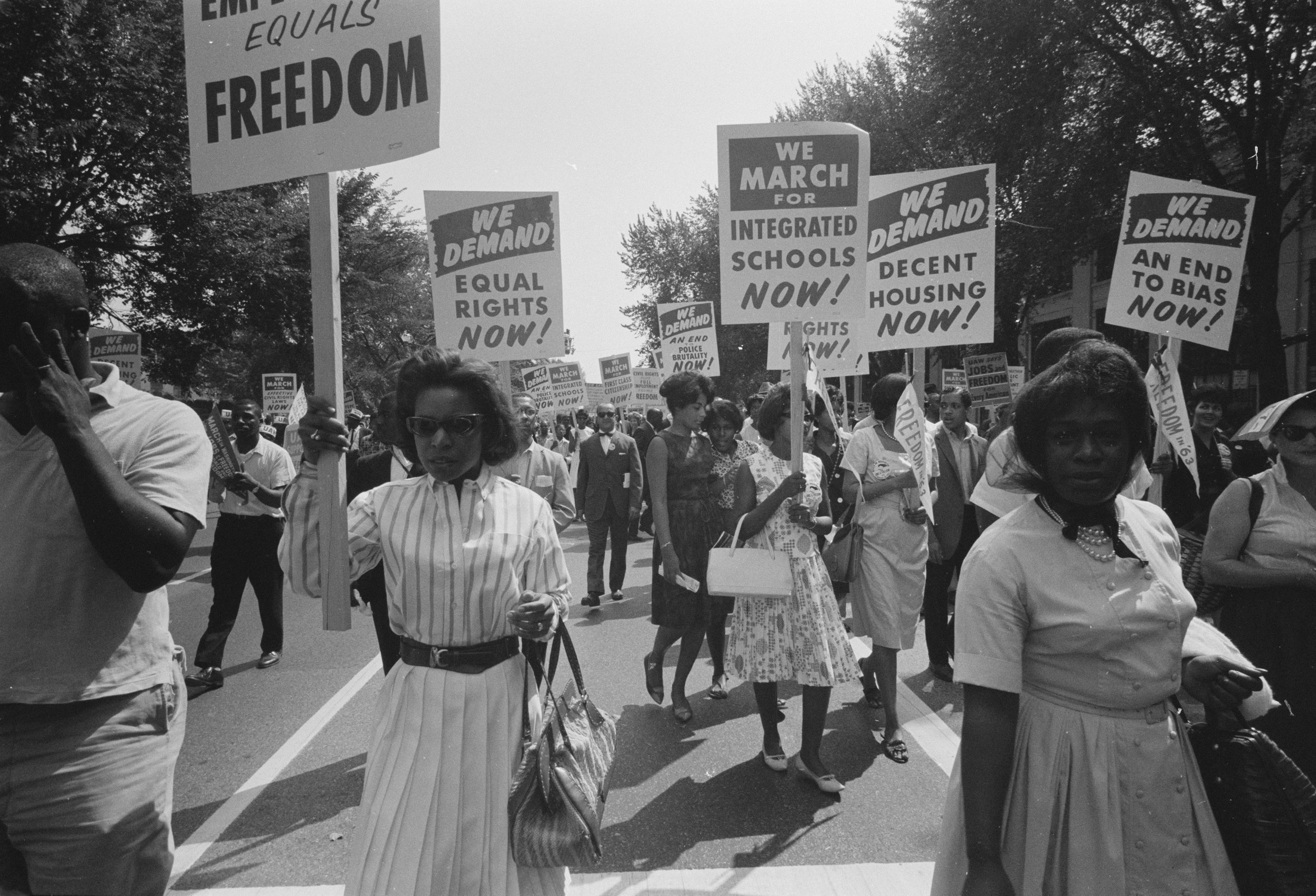
Are you ready to uncover fascinating information about the civil rights movement? This pivotal era in American history reshaped national policies, empowered individuals across the United States, and sparked global conversations about human rights. From daring acts of protest to groundbreaking legal victories, there is a wealth of intriguing details that might surprise you.
Uncovering the Movement’s Early Origins
Although the civil rights movement officially took shape in the late 1940s, you can trace its roots back to decades of earlier struggles for equality. During the mid-20th century, movement participants employed tactics such as sit-ins, boycotts, and freedom rides to end racial segregation and discrimination (Library of Congress). What makes this particularly interesting is how everyday people, often facing violent pushback, used nonviolent protest methods inspired by Mahatma Gandhi’s strategies.
Key Early Developments
- In 1954, Brown v. Board of Education ended the legal basis for segregated public schools, though many schools remained divided in practice.
- Between 1955 and 1956, the Montgomery Bus Boycott succeeded after the Supreme Court’s ruling in Browder v. Gayle declared bus segregation unconstitutional (PBS American Experience).
Explore Defining Legal Victories
One thing you might find surprising is that legal battles played out at every level of government, periodically rewriting the social fabric of the nation. By the 1960s, substantial legislative changes began to protect African Americans’ rights under the law.
Vital Laws And Rulings
Civil Rights Act of 1964
This comprehensive legislation barred discrimination based on race, color, religion, sex, or national origin. It also established the U.S. Equal Employment Opportunity Commission (EEOC) to enforce fair hiring practices.Voting Rights Act of 1965
Often referred to as the most powerful legal tool for destroying barriers to Black voter registration, this law outlawed literacy tests and other schemes that had deliberately kept African Americans away from the polls (PBS American Experience).Shelby County v. Holder (2013)
Decades after these victories, certain provisions of the Voting Rights Act were weakened, enabling renewed voter suppression efforts. Modern civil rights lawyers continue to fight these restrictions (Southern Med Law).
Connecting with Lesser-Known Activists
While Martin Luther King Jr. is a household name, you may not realize how many other leaders and organizers contributed equally important energy to the movement. Legal powerhouses like Thurgood Marshall argued vital cases in front of the Supreme Court. Individuals like Mary White Ovington, who helped found the NAACP, bridged multiple social justice battles by also supporting women’s suffrage.
Notable Figures You Should Know
- Thurgood Marshall: His victory in Brown v. Board of Education paved the way for educational equality. He later became the first Black Supreme Court Justice (NAACP).
- John Lewis: A champion of nonviolence and a Freedom Rider, Lewis chaired the Student Nonviolent Coordinating Committee (SNCC) at age 23.
- A. Philip Randolph: Often called the spiritual father of the movement, he was integral to organizing the March on Washington in 1963 (JFK Library).
Recognize Global Influences
You might be intrigued to learn that the civil rights movement drew worldwide attention and inspired other social justice campaigns. The Freedom Riders who tested segregation on interstate buses encouraged activists around the globe to push for systemic change. In fact, protest songs like “We Shall Overcome” were adapted into multiple languages, including Hindi, by activists in India seeking to overcome caste-based discrimination (PBS American Experience).
See Its Lasting Impact
Even though the most high-profile events happened between the 1940s and the 1960s, the civil rights movement still echoes in modern-day activism. Groups championing LGBTQ+ rights, disability rights, and immigrant rights have used similar strategies to advocate for equality. In the aftermath of Hurricane Katrina, systemic racial inequalities became even more visible, motivating present-day civil rights lawyers to fight renewed forms of discrimination (PBS American Experience).
If you enjoy discovering unexpected angles on historical moments, you may also want to check out fascinating facts about the American civil war or unexpected facts about the renaissance to broaden your perspective on other significant eras.
Key Takeaways
- Activists embraced nonviolent protests, even under the threat of arrests and violent attacks.
- Legal landmarks like Brown v. Board of Education, the Civil Rights Act, and the Voting Rights Act redefined civic life for millions of Americans.
- Influential yet lesser-known figures, such as Mary White Ovington and A. Philip Randolph, played critical roles in shaping the movement.
- The fight for equal rights continues with contemporary legal battles and growing activism in various communities.
- Global movements, including those in India and beyond, borrowed inspiration and songs from the civil rights movement.
Learning about these pivotal moments offers you a deeper appreciation for how one movement’s courage can ripple across decades and continents. By recognizing these extraordinary stories, you can better understand America’s ongoing journey toward a more inclusive society.